UoM Categories
Organize your units of measure into logical groups (Length, Weight, Volume, and so on) so the system knows which units can convert to each other.
Last updated on June 29, 2026
A UoM category is a group of units that measure the same kind of thing, like all your length units (meter, foot, inch) or all your weight units (kilogram, pound, ounce). Categories are the foundation of Units of Measure: every unit lives inside one, and units only ever convert to other units in the same category. You manage categories from the Units of Measure screen, where each category is shown as a card with its units and conversions just one click away. Qualis ships with a full set of common categories already set up, so most of the time you are browsing and adjusting rather than starting from scratch. This guide covers what you do here most often: browsing your categories, creating a new one, looking inside a category, editing it, reviewing its history, and removing one you no longer need.
Before you start
A couple of terms you will meet right away (there is a fuller list at the end):
- A category is a group of units that measure the same kind of thing and can convert to each other, like all the length units.
- The reference unit is the one unit in a category that everything else is measured against. For Length, the reference is the meter.
You reach categories from the left sidebar under Product Management, then Units of Measure.
Browse your categories
Start here to see every kind of measurement you have set up and to find the one you need.
- Open Units of Measure from the sidebar. You land on a grid of cards, one per category. Each card shows the category name, its code (for example
UOMC-00001), a short description, an Active or Inactive status, how many units it contains, and its reference unit (shown with a star, like m for meters).
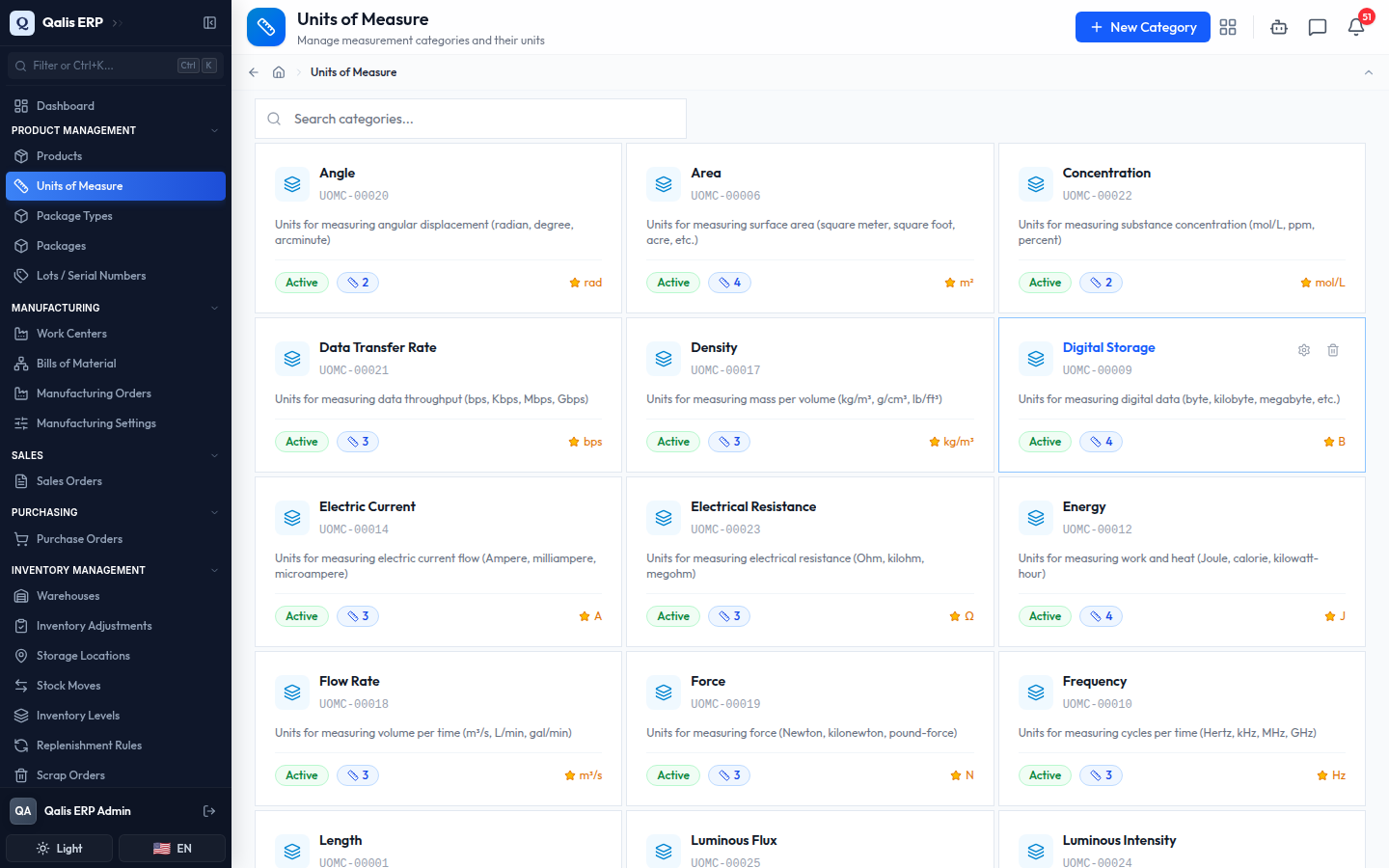
- To find a category quickly, type in the Search categories... box at the top. The grid filters as you type, so there is no need to press Enter.
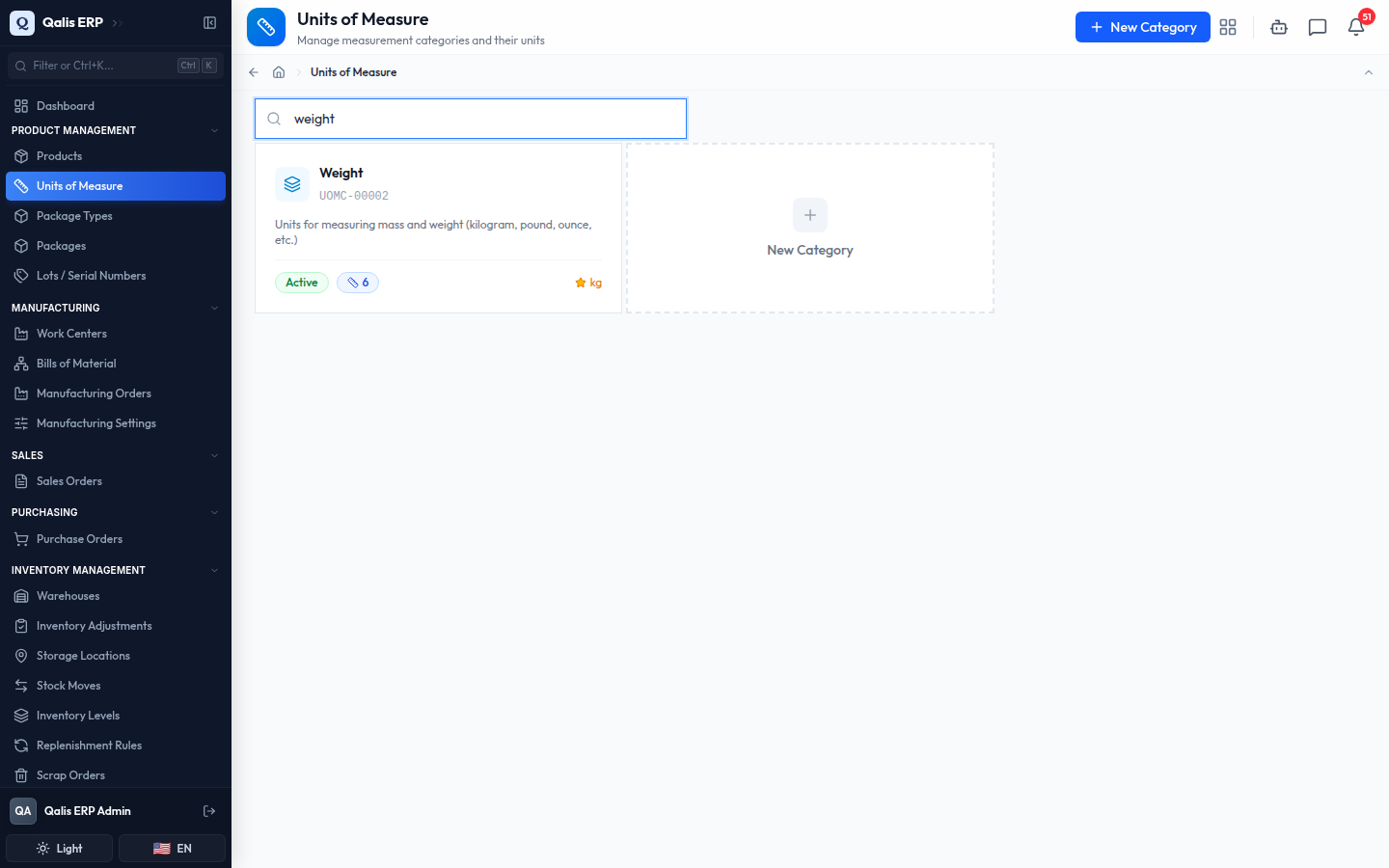
Each card tells you the health of a category at a glance: the unit count shows how many units it holds, and the star marks its reference unit. A category with no reference unit cannot convert between its units until you add one.
Create a category
If you measure something the standard categories do not cover, create your own category, then add units to it.
- Click New Category at the top right. A small dialog opens.
- Type a Name (this field is required), for example
Electric Charge. The name is what you and your colleagues will recognize it by. - Add a short Description so others know what the category is for. This is optional but helpful.
- Leave Active turned on so the category is available for creating units. You can switch it off later to retire it without deleting it.
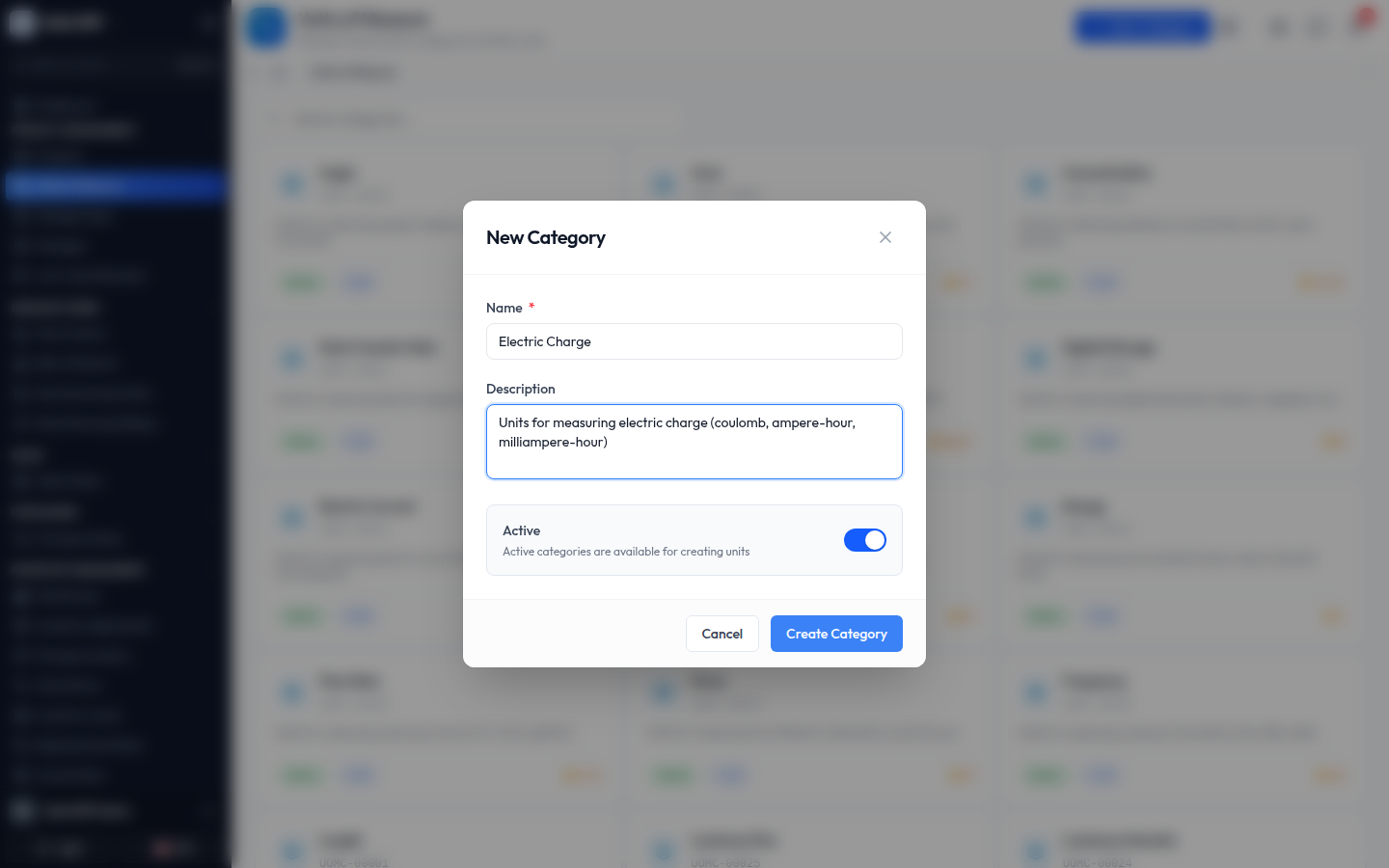
- Click Create Category. Your new category appears in the grid right away, with a code assigned automatically and a count of
0units, ready for you to fill.
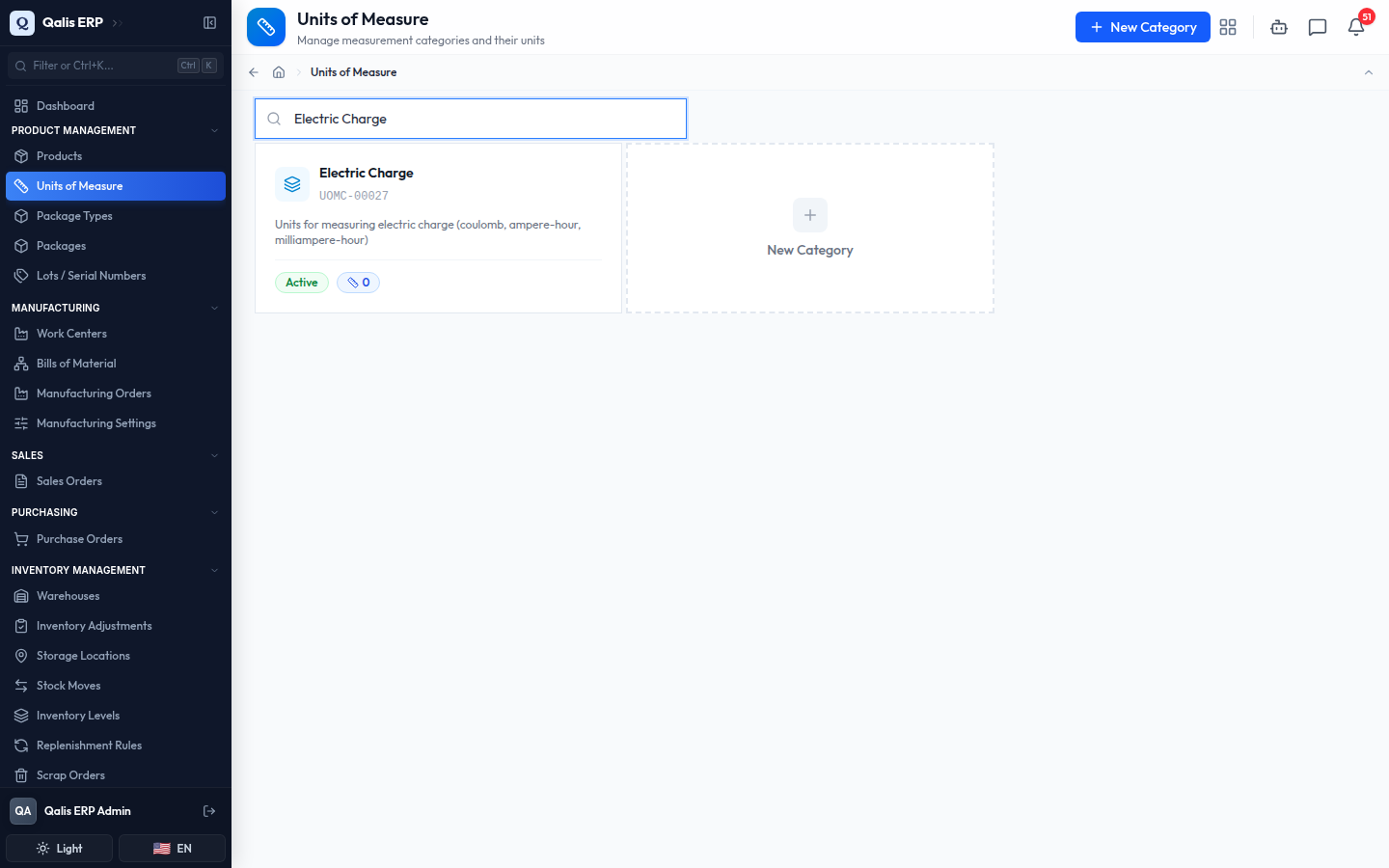
A brand new category has no units yet. Open it (see the next section) and add its units, starting with the reference unit that everything else will be measured against.
Look inside a category
Open any category to see all of its units side by side and to convert a value from one unit to another in seconds.
- From the Units of Measure screen, click a category card (for example Length) to open it. At the top you see the category description, its status, the reference unit, and the unit count. Below that is a table of every unit in the category, with its Symbol, its Type (Reference, Bigger, or Smaller), and its Ratio (how many reference units it equals). The reference unit sits at the top with a star.
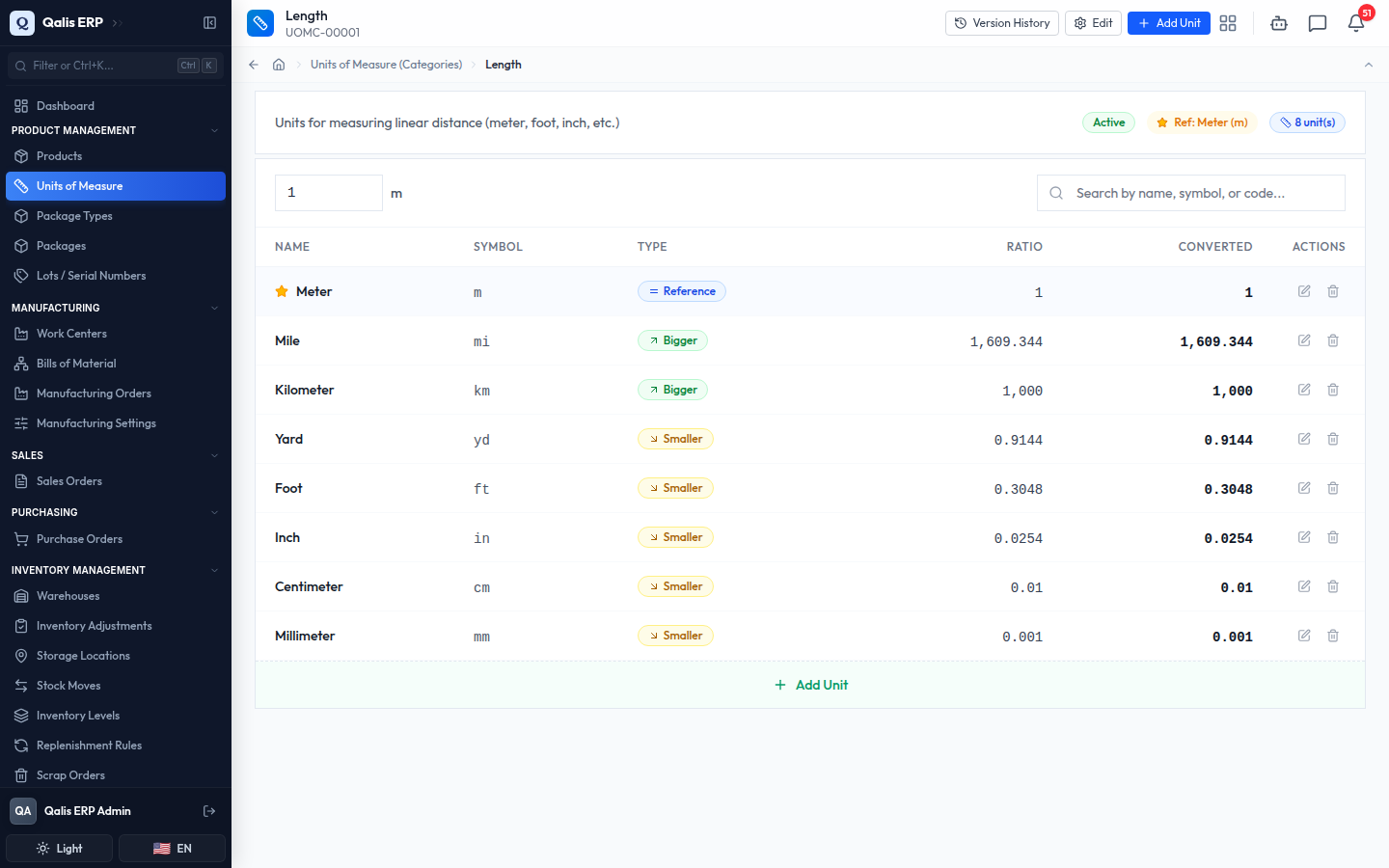
- To convert a value, type a number into the box at the top left of the table (next to the reference symbol). The Converted column instantly shows what that many of each unit equals in the reference unit. In the example below, entering
5shows that 5 miles are 8,046.72 meters, 5 kilometers are 5,000 meters, and 5 centimeters are 0.05 meters.
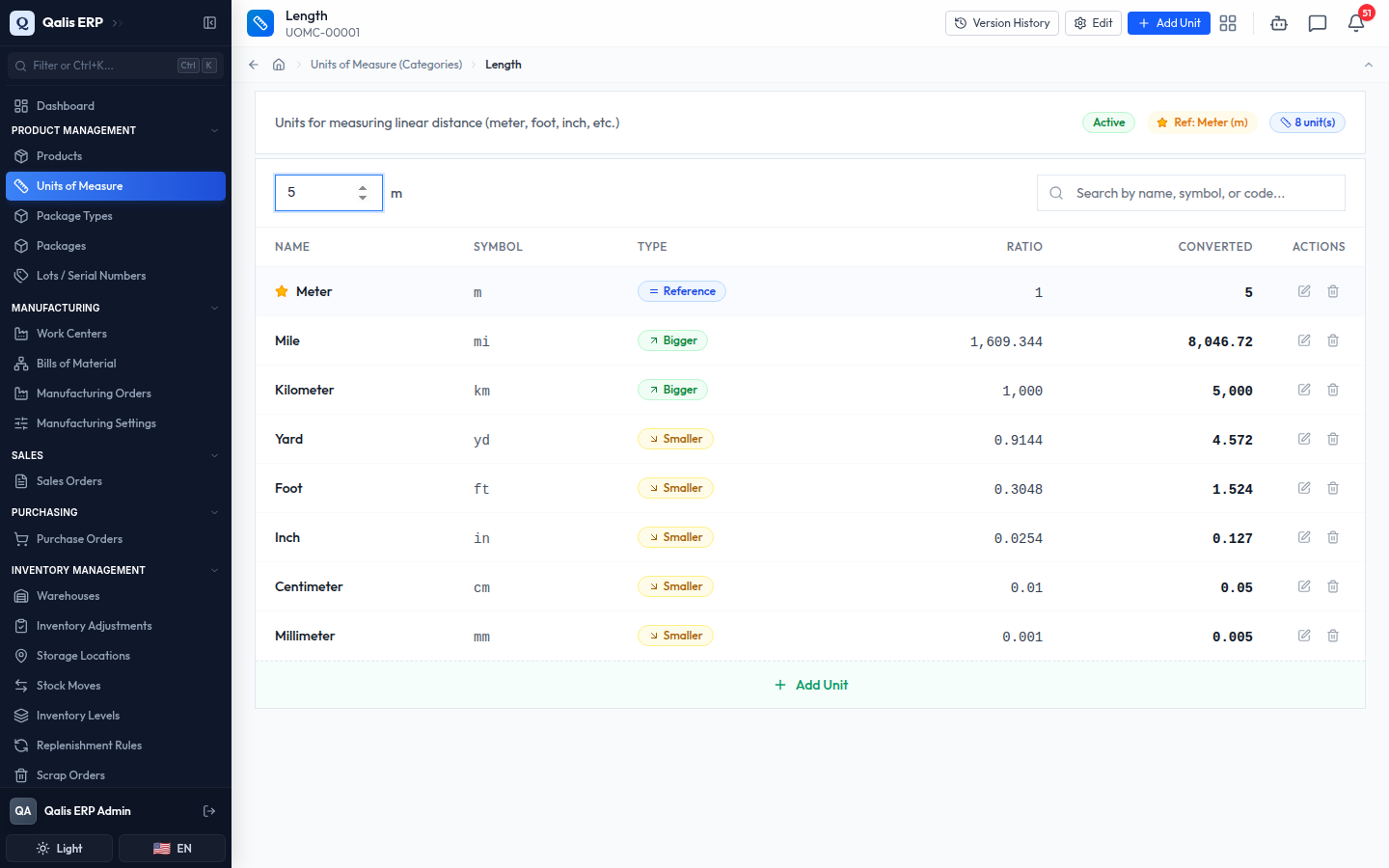
From this screen you can also add a new unit (Add Unit), open a unit to edit it, review the category's history (Version History), and edit the category itself (Edit). The top bar keeps these actions one click away.
Edit a category
Update a category's name, description, or status at any time.
- Open the category, then click Edit in the top bar. (You can also hover a category card on the main screen and click the small gear icon.) A dialog opens with the category's current values filled in.
- Change the Name, Description, or the Active switch as needed. Turning Active off retires the category without deleting it, so it stays out of the way but its data is kept.
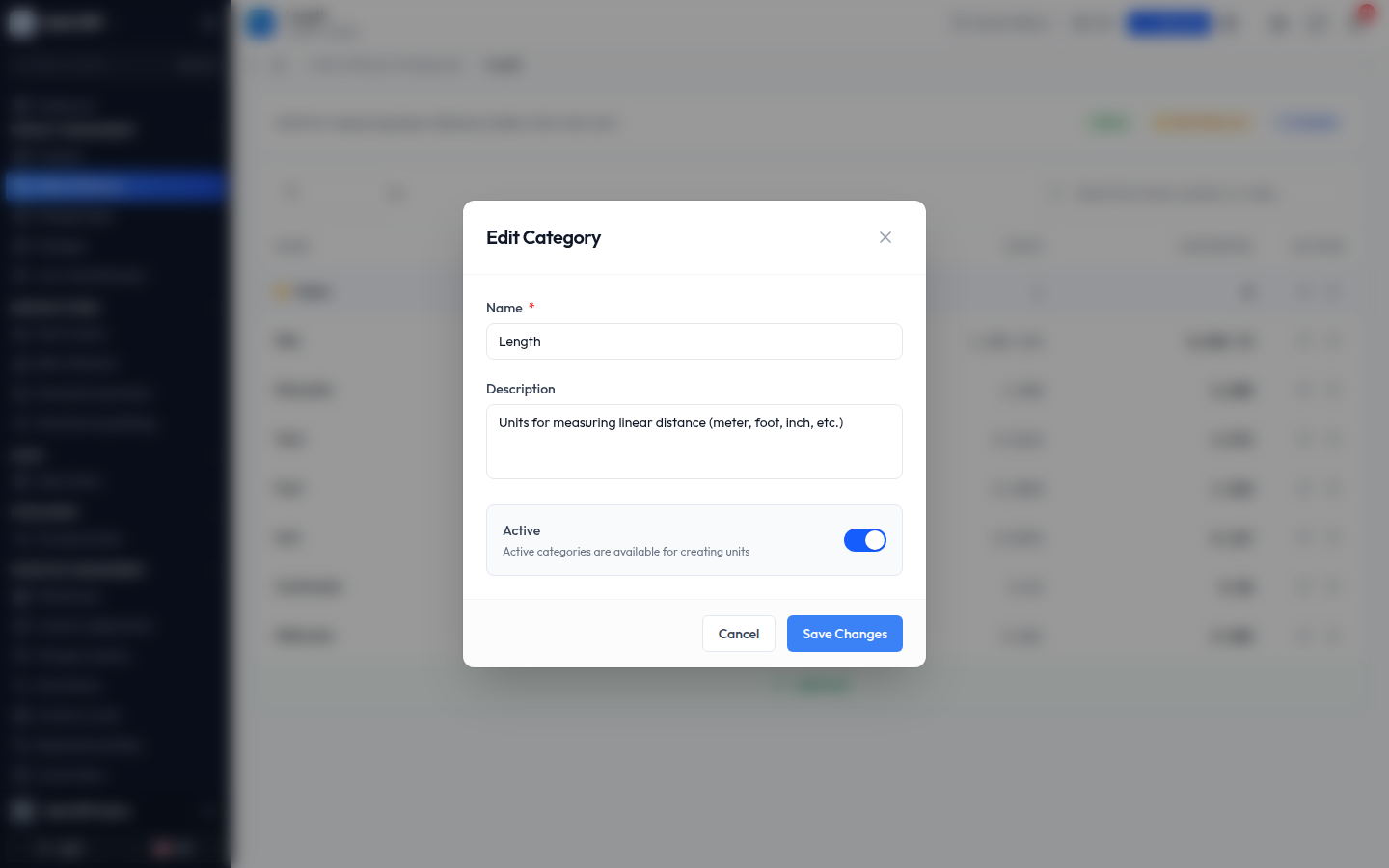
- Click Save Changes. Your updates are saved and shown right away.
Review a category's history
Every change to a category is recorded, so you can always see what changed, when, and who made it.
- Open the category and click Version History in the top bar. You see a Current Version summary at the top, then a list of All Versions, newest first. Each entry shows the version number, the date and time, and the person who made the change. Entries that changed something are tagged with how many fields changed.
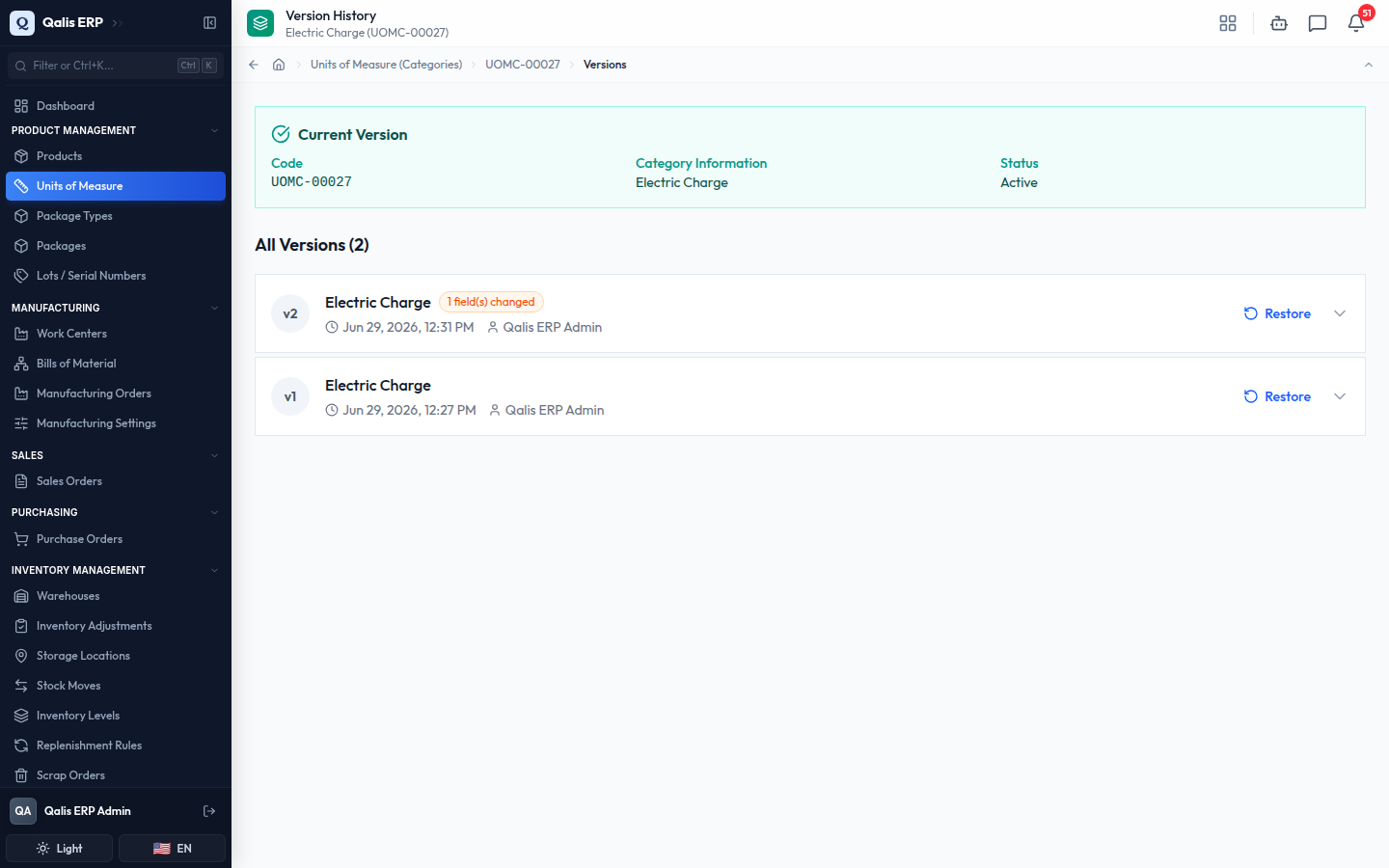
- Click a version to expand it and see exactly what changed. The Changes since previous version section shows each edited field with its value Before and After, side by side.
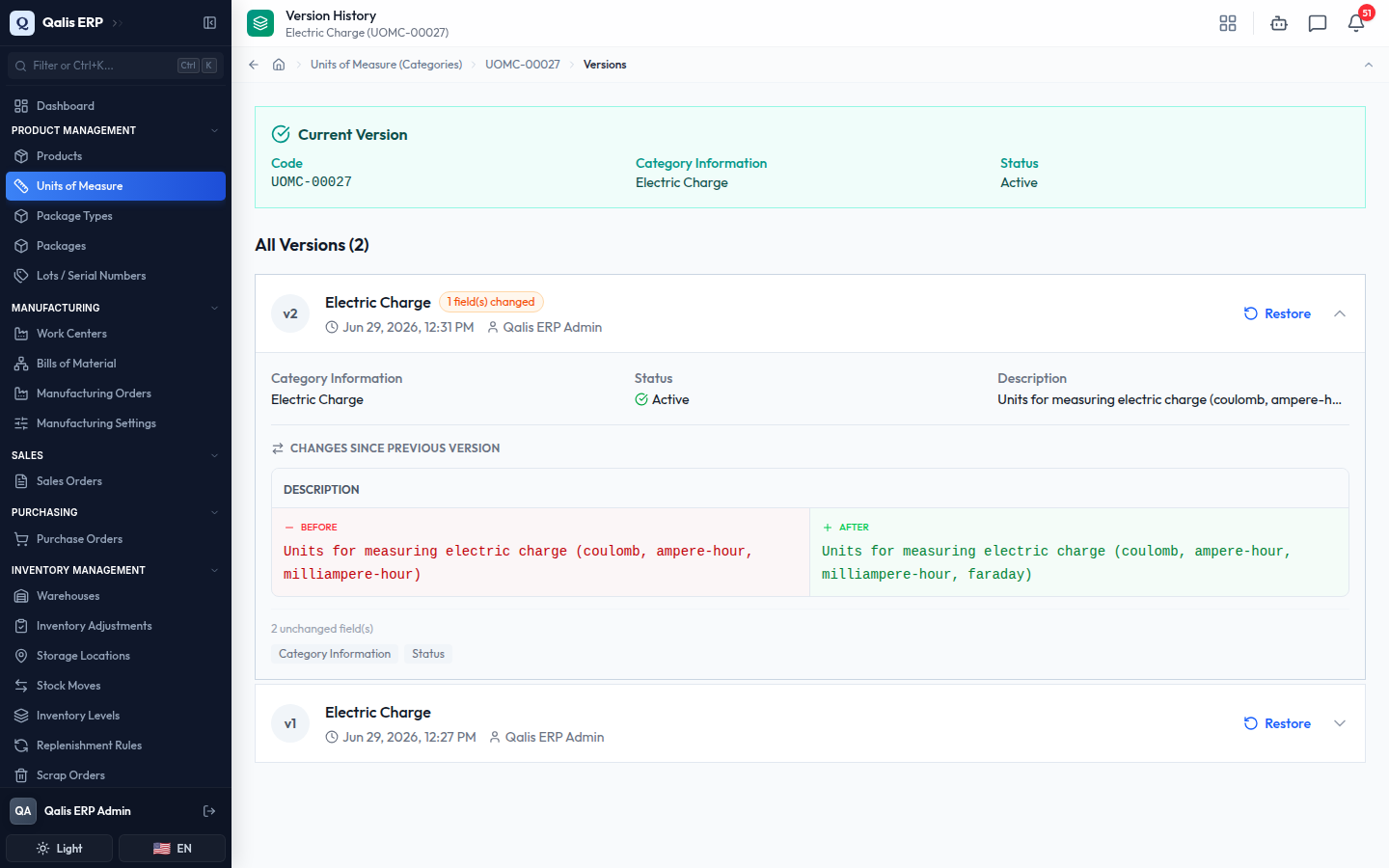
If you need to undo a change, click Restore on the version you want to go back to. The category's details are replaced with that version's values, and the restore itself is recorded as a new entry in the history.
Remove a category
When you no longer need a category, move it to the trash. It is not erased right away, so you can bring it back if you change your mind.
- On the Units of Measure screen, hover the category card and click the small trash icon (or use the delete action on the category). A confirmation dialog opens naming the category you are about to remove.
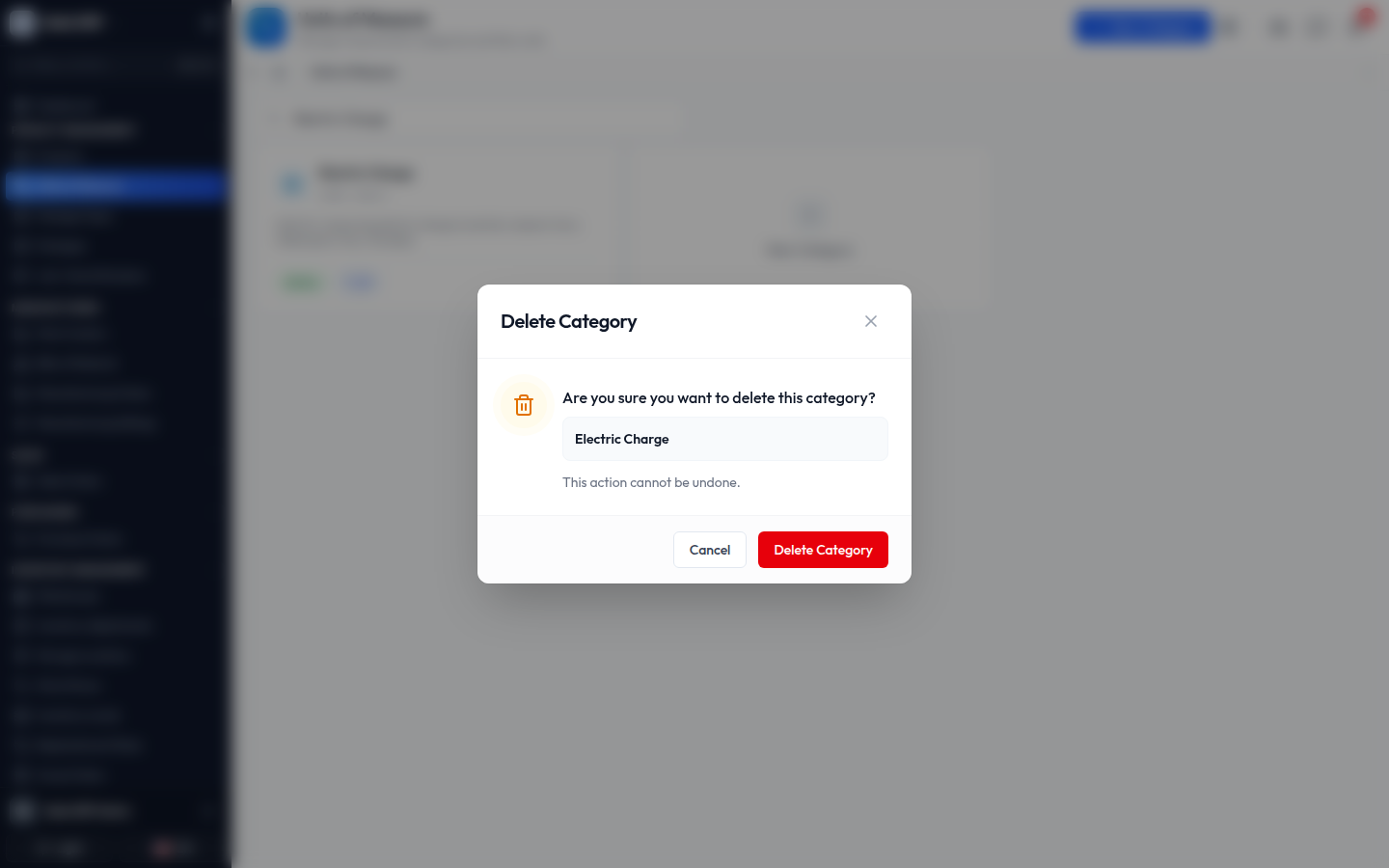
-
Click Delete Category to confirm. The category moves to the trash and disappears from the main grid.
-
To see removed categories, open the trash (the Trash button appears at the top of the Units of Measure screen once something has been deleted). Each row offers a Restore action to bring the category back, and a permanent delete action to remove it for good. Empty Trash clears everything at once.
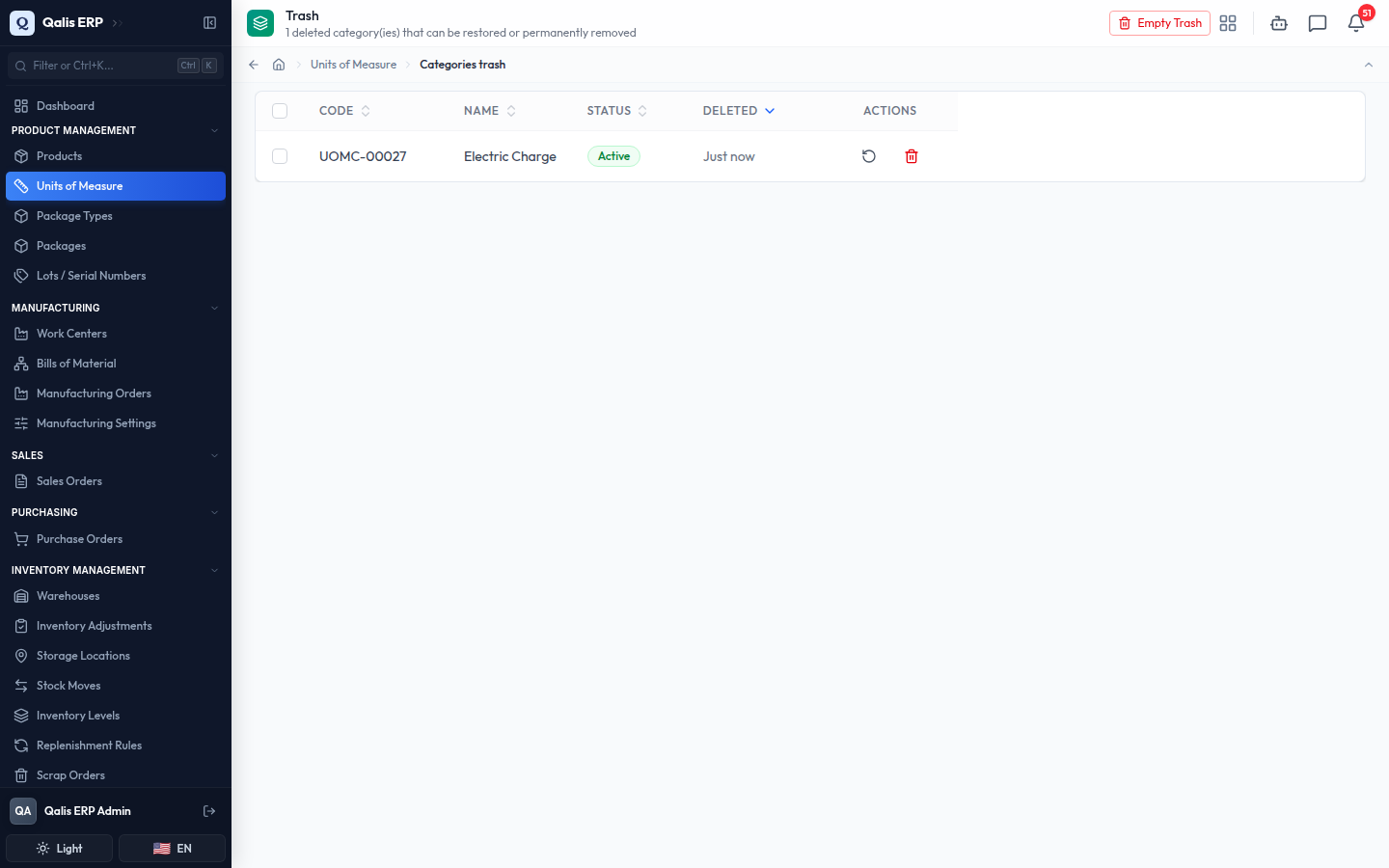
Moving a category to trash does not delete its units, and you can restore the category from the trash at any time. Permanently deleting from the trash cannot be undone, so use it only when you are sure.
Good to know
A few terms you will see throughout this module, in plain words:
- Category: a group of units that measure the same thing and can convert to each other, such as Length or Weight. Units only convert within their own category.
- Reference unit: the one base unit in a category that all the others are measured against (the meter for Length, the kilogram for Weight). Each category has exactly one.
- Code: the automatic reference id given to each category, like
UOMC-00001. You do not type it; the system assigns it when the category is created. - Active / Inactive: an active category is available for use across the app. Switching a category to inactive retires it without deleting it.
- Trash: a holding area for removed categories. Items here can be restored, or permanently deleted when you are certain.